What Is Myopia?
Nearsightedness in school-age children
Myopia is another word for nearsightedness. With myopia, sharp distance vision is limited, meaning objects far away appear blurry, while nearby objects are seen clearly and sharply. More and more school-age children are becoming glasses wearers. In Germany too, so-called “school myopia” continues to spread. While only a handful of children need glasses to read letters or numbers on the board at the start of primary school, by upper secondary school it's one in every three. The latest estimates suggest that in Germany, roughly one in every two young adults is nearsighted. 1

What are the causes?
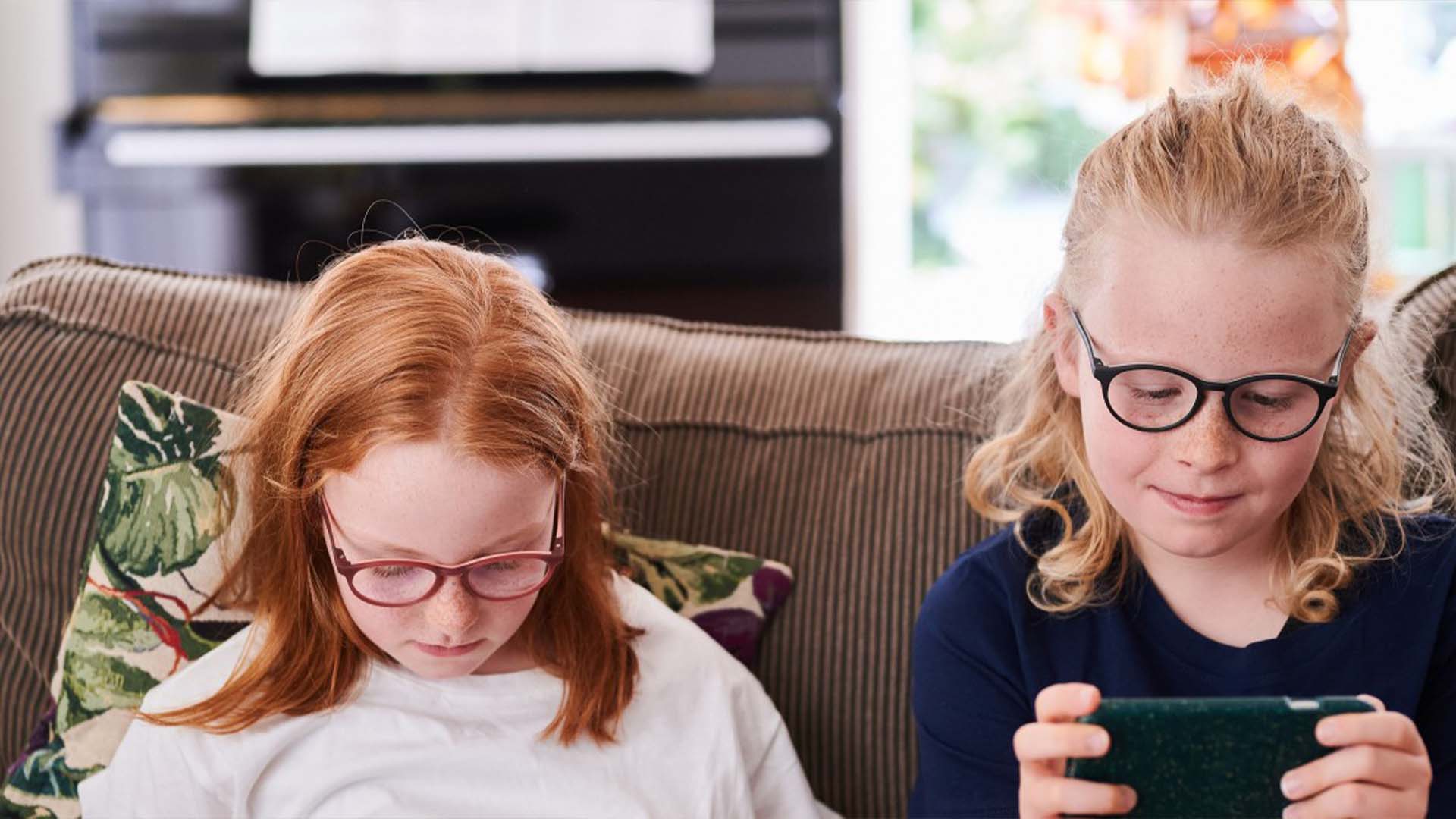
A key factor is today's lifestyle, in which children and teenagers spend so much time focusing up close. “Studies show that lifestyle accounts for around 50 percent of the influence on nearsightedness,” said Professor Bettina Wabbels, Head of the Department of Orthoptics, Neuro- and Paediatric Ophthalmology at University Hospital Bonn.1 It makes no real difference whether children and teens are reading books and tablets or doing homework in notebooks or on a computer. Spending hours at the same, often too-short distance from screens and books encourages nearsightedness and places excessive strain on the eye lens's curvature mechanism, damaging the eyes in the process.
Source:1 https://www.aerztezeitung.de/medizin/krankheiten/kindergesundheit/article/972014/augenaerzte-warnen-wann-smartphone-kinderaugen-gefaehrlich.html